

KAT Got Your Tongue?
The beans were spilled by Uncle Freezie

New York Knicks Head Coach Thomas J Thibodeau isn’t a mellowed-out version of himself. He’s not Zen such as another Chicago Bulls head coach whose name we won't mention here. He’s not Greg Popovich tossing jokes at sideline reporters. He is not Steve Kerr-like, choosing his words carefully in postgame pressers. He’s still the same intense, defensive-minded, basketball-obsessed coach who lives and dies with every possession. His sideline presence is still a spectacle—pacing, shouting, clapping, and making wild hand gestures like he’s directing traffic in Midtown Manhattan.
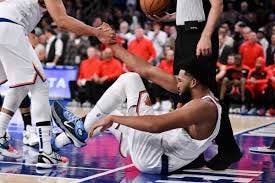
The difference is control.
Coach Thibodeau seems to have mastered the balance between passion and restraint. He’s still letting the refs hear it, but he’s stopping just short of the boiling point. It’s like he’s playing a game within the game—pushing the envelope, working the officials, but never giving them a reason to reach for the whistle and hit him with a tech. It’s a tightrope walk, and so far, he’s pulling it off.
That is a tough skill in today’s NBA. Today officiating inconsistency can drive even the calmest coaches to the brink. Calls are missed. Superstar whistles dictate games. Players flop, sell contact, and get to the free-throw line, while physical teams like the Knicks often get the short end of the stick. Any coach would be tempted to let loose.
Is it strategy? Possibly. Maybe Thibs understands that yelling at the refs doesn’t help much anymore. The NBA has tightened its grip on sideline behavior, and the days of coaches working officials over for calls might be fading.
Or maybe it’s about discipline. If Thibs is asking his players to stay composed in tough moments, he’s leading by example. The Knicks have developed an identity of toughness and resilience—taking hits and pushing forward. If the players aren’t whining to the refs, why should the coach?
Some fans might wonder if Thibs is playing it too safe. A well-timed technical can sometimes fire up a team, send a message to the refs, or show the squad that the coach has their back. Knicks legends like Pat Riley and Jeff Van Gundy knew how to use that to their advantage.
Here is the my thing. Coaches always ask players to sacrifice their bodies. The coach sacrifices his vocal cords. For every LeBron James and Tim Duncan there are Brandon Roys and Amar'e Stoudemires. For every Steph Curry there is a Mark Price. Telling a player to play through borderline egregious contact to only have it happen over and over seems to be a coach who doesn't care about the safety and welfare of his players.
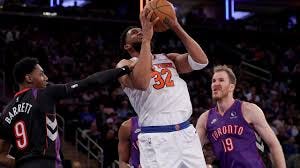
If youve watched a Knicks game this season youve heard Karl-Anthony Towns scream "Oh my God." Maybe even multiple times per game.
Why is that though? It is because Coach Thibs is screaming at a fouled player to get back on his beloved defense.
Maybe Coach Thibs does care and doesn't know how to show it.
Or maybe he cares more about defense than anything else in basketball.
So far this season, every Knicks rotation has missed time due to injury except one. That one player is the NBA's IRON MAN. That same player said something to the coach about an inordinate amount of minutes and high-leverage roles. The coach dismissed the player's assumption out-of-hand.
Back to the technical fouls though, he has one.
Uncle Freezie thinks, yes me, thinks not getting tech'd up is similar to not standing up for your players. (pardon the slang)

Discipline is only as pristine as your surroundings. Players have to stand up for themselves even if the coach does not.
Here is a closing thought.
When a coach takes a tech—especially over a no-call or a rough foul—it sends a loud and clear message to the locker room: “I see what’s happening out there, and I’m not going to let you go through it alone.”
Players respect that. They feed off that energy. In a league where trust and buy-in are everything, knowing your coach is willing to take a hit for you can galvanize a team and build stronger chemistry.
A well-timed technical can act like hitting an emotional reset button. It can snap a team out of a funk or give them a jolt when the momentum has stalled. Think of it like a basketball version of slapping the table in a huddle—it wakes guys up.
Coaches like Pat Riley, Chuck Daly, even Phil Jackson—masters of the psychological game—used technicals as a motivational tool. Sometimes you need a spark. And if that spark comes from the coach going off and getting T’d up? That works.
Believe it or not, referees are human. When a coach gets animated and takes a tech, it puts the officiating crew on notice. They’ll usually tighten up after that—making sure they don’t miss another call in favor of the other team. It can shift the way the game is called for the next few possessions or even the rest of the night.
In physical games—like most Knicks matchups—when your players are getting bumped, hacked, and thrown around with no calls, silence can feel like neglect. Getting loud, taking a stand, and risking a tech reinforces the team’s identity. “We’re not soft. We don’t just take it. We fight back.”
It becomes part of the culture. And culture matters, especially in the playoffs.
The best coaches don’t just lose their cool at random. They pick their spots. A technical foul in the first quarter of a February game is pointless. But in a third-quarter run when your star just got hacked with no whistle? That’s the moment to strike.
It’s like sending a message without saying a word. And if that message helps your team feel supported, focused, and fired up? It’s worth the price of one free throw.
Now get tech'd up over that Thibs. Shots.
Peace y'all